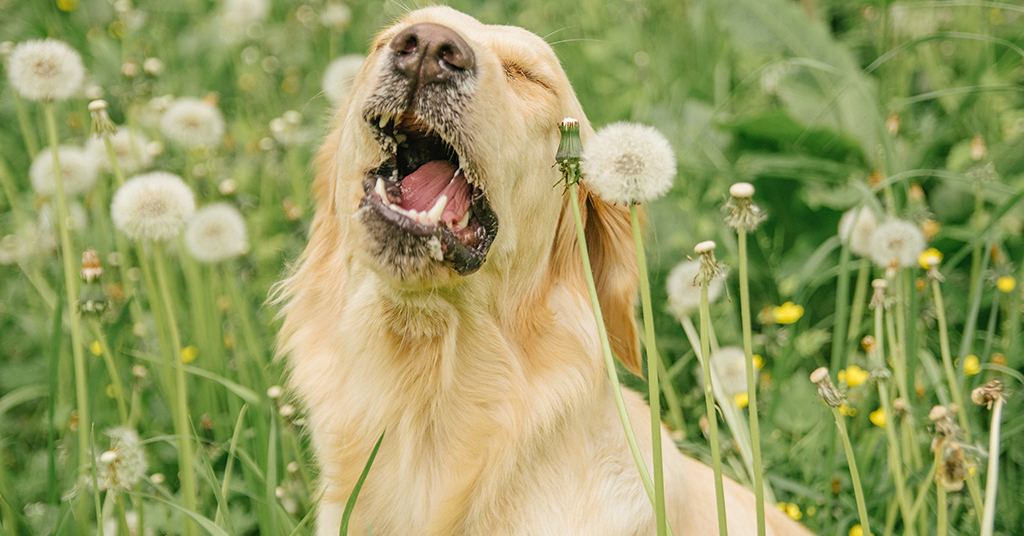
Reverse sneezing in dogs is a sudden, noisy episode where a dog rapidly pulls air in through the nose, creating a loud honking or snorting sound. Most episodes last under a minute and are harmless, but frequent or changing episodes can point to an underlying problem that deserves a veterinary exam.
The first time you hear it, reverse sneezing can be genuinely frightening. Your dog stands still, extends the neck, and makes a sound that seems like choking or struggling to breathe. Then, just as quickly as it started, the episode ends and your dog goes back to playing as if nothing happened. Many Boulder dog owners call our team after witnessing this for the first time, and that is a completely reasonable response. Reverse sneezing in dogs ranks among the most common reasons owners reach out with breathing concerns. At Boulder Veterinary Hospital, we help pet owners understand what reverse sneezing is, what causes it, how it differs from more serious breathing issues, and when it is time to schedule a visit.
What Is Reverse Sneezing in Dogs?
Reverse sneezing is a reflex, not an illness, and it is surprisingly common.
The Medical Term and What Happens in the Body
Veterinarians often call this reflex paroxysmal respiration or the pharyngeal gag reflex. It typically begins when something irritates the back of the nose, the throat, or the soft palate. A regular sneeze pushes air out to clear the nasal passages. A reverse sneeze does the opposite, pulling air inward in a series of quick, forceful breaths. The soft palate may briefly spasm during the episode, which narrows the airway and produces that distinctive noise.
What Dog Reverse Sneezing Looks and Sounds Like
Knowing the typical signs helps you tell a reverse sneeze apart from other respiratory problems. During a classic episode, you may notice that your dog:
- Stands still with elbows spread apart and head pushed forward
- Makes repeated snorting, honking, or gasping sounds
- Keeps the mouth closed while breathing hard through the nose
- Has wide, bulging eyes during the episode
- Returns to normal behavior within seconds to a minute
Most dogs remain alert and responsive the entire time. Gums and tongue should stay their usual pink color. Recording a short video on your phone during an episode gives your veterinarian valuable information, since dogs rarely reverse sneeze on cue in the exam room.
Why Do Dogs Reverse Sneeze?
Almost anything that irritates the upper airway can set off an episode.
Common Triggers
Some dogs reverse sneeze only once in a blue moon, while others have a few predictable triggers. Frequently reported causes include:
- Excitement, such as greeting visitors or anticipating a walk
- Pulling against a collar or leash, which puts pressure on the throat
- Eating or drinking too quickly
- Seasonal pollen, dust, and other environmental allergens
- Strong scents like perfume, air fresheners, smoke, or cleaning products
- Sudden changes in temperature, like stepping out into cold Colorado air
- Postnasal drip from allergies or a mild upper respiratory infection
Breeds That Reverse Sneeze More Often
Any dog can reverse sneeze, but small breeds and brachycephalic (short-nosed) breeds tend to experience it more frequently. Pugs, French Bulldogs, Boston Terriers, Shih Tzus, Chihuahuas, and Yorkshire Terriers top the list. Their compact airway anatomy and elongated soft palates make the throat more sensitive to irritation.
Less Common Underlying Causes
Occasionally, an ongoing irritation keeps the reflex firing. Nasal mites, inflammation inside the nose, dental infections near the nasal passages, and foreign objects can all play a role. In the Boulder area, grass awns such as cheatgrass and foxtail seeds sometimes work their way into a dog’s nose after a hike, leading to sudden, repeated episodes and sneezing.
Is Reverse Sneezing Dangerous for Dogs?
In most cases, no. An occasional, brief episode in an otherwise healthy dog is not considered harmful.
Why Most Episodes Are Harmless
A typical reverse sneeze does not block the airway completely, and dogs do not lose consciousness from it. Once the irritation clears or the throat relaxes, normal breathing resumes on its own. Many dogs reverse sneeze periodically throughout their lives without any lasting effects.
Conditions That Can Look Similar
The challenge is that several more serious problems can resemble reverse sneezing to an untrained eye. Tracheal collapse, common in small breeds, causes a harsh “goose honk” cough that often comes with exercise or excitement. Kennel cough produces a dry, hacking cough that may end in gagging. True choking on an object, heart disease, and respiratory infections can also cause noisy breathing. Because the treatment for each condition is very different, an accurate diagnosis matters.
Why New Episodes in Older Dogs Deserve a Closer Look
Reverse sneezing in dogs usually starts early in life and follows a familiar rhythm. When a senior dog suddenly begins reverse sneezing for the first time, veterinarians tend to look more carefully. Dental disease, nasal polyps, and nasal tumors become more likely with age, and each can irritate the nasal passages in ways that trigger the reflex. Catching these problems early often opens up more treatment options, so a new pattern in an older dog is worth a conversation with your vet.
Warning Signs That Need Prompt Attention
Contact your veterinarian right away if episodes come with any of the following:
- Blue, purple, or pale gums or tongue
- Collapse, weakness, or fainting
- Nasal discharge, especially if it is bloody, thick, or from one side only
- Pawing at the face or nose
- Labored breathing that continues after the episode ends
How Do Veterinarians Diagnose Reverse Sneezing?
Diagnosis usually starts with a conversation and a careful look at your dog’s overall health.
History, Video, and a Physical Exam
Your veterinarian will ask how often the episodes occur, how long they last, and what tends to happen right before. That smartphone video becomes especially helpful here, since it lets the doctor see and hear exactly what you see at home. A thorough physical exam includes listening to the heart and lungs, examining the mouth and throat, and checking the nose for discharge or airflow changes.
Additional Testing When Needed
When episodes are frequent, severe, or getting worse, your veterinarian may recommend further diagnostics to look for an underlying cause. These may include chest or skull X-rays, allergy testing, bloodwork, or a rhinoscopy, which uses a small camera to view the inside of the nasal passages. Rhinoscopy can sometimes locate and remove foreign material like a grass awn at the same time.
Staying Calm During an Episode
When it comes to managing episodes, the most helpful thing you can do is stay calm and observe. Dogs often pick up on their owner’s stress, and a relaxed environment can help an excited pup settle. Note the time, duration, and possible triggers, then share those details with your veterinary team. If your dog has frequent episodes, ask your veterinarian which specific steps are appropriate for your pet rather than trying techniques you find online. Treatment, when needed, depends entirely on the cause, which is why a professional evaluation comes first.
When Reverse Sneezing Becomes a Pattern
An isolated reverse sneeze every now and then is rarely cause for concern. A pattern is a different story. If episodes are happening more often, lasting longer, appearing suddenly in an older dog, or showing up alongside other symptoms, it is time to have your dog evaluated. Changes in frequency or intensity often signal that something new is irritating the airway, such as allergies, an infection, or a lodged foreign object.
The veterinary team at Boulder Veterinary Hospital can examine your dog, review your videos, and help determine whether reverse sneezing in your dog is a harmless quirk or a sign of a condition that needs treatment. If you have noticed new or worsening breathing sounds, we are here to give you answers and peace of mind.
Concerned about your dog’s reverse sneezing? Call Boulder Veterinary Hospital at (303) 442-6262 to book an exam.